
The Sedona Pterodactyl Problem: A Reasoned Inquiry
The conventional view is that pterodactyls disappeared approximately 65 million years ago. This conclusion is understandable, but it rests on an important assumption: that an animal facing an extinction event remains confined within the universe where the threat exists. Once that assumption is removed, the survival of pterodactyls becomes considerably easier to explain.
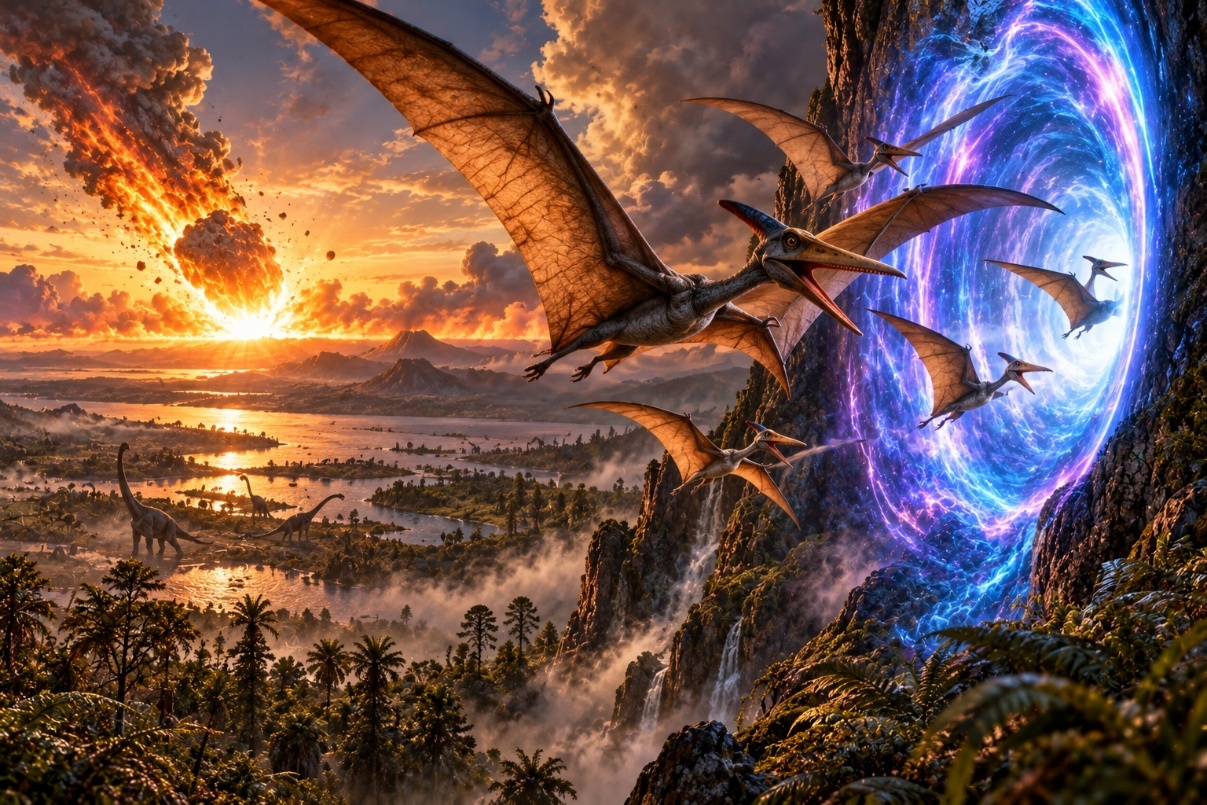
The best available evidence strongly suggests that a small number of pterosaurs escaped extinction by passing through Vortexes into parallel universes. The ability to move between parallel universes allowed pterodactyls to evade predators, locate food, find mates, and seek more favorable climates.
Most importantly, when an extinction event occurred approximately 65 million years ago, some pterodactyls did something unavailable to nearly every other large animal on Earth.
They left.
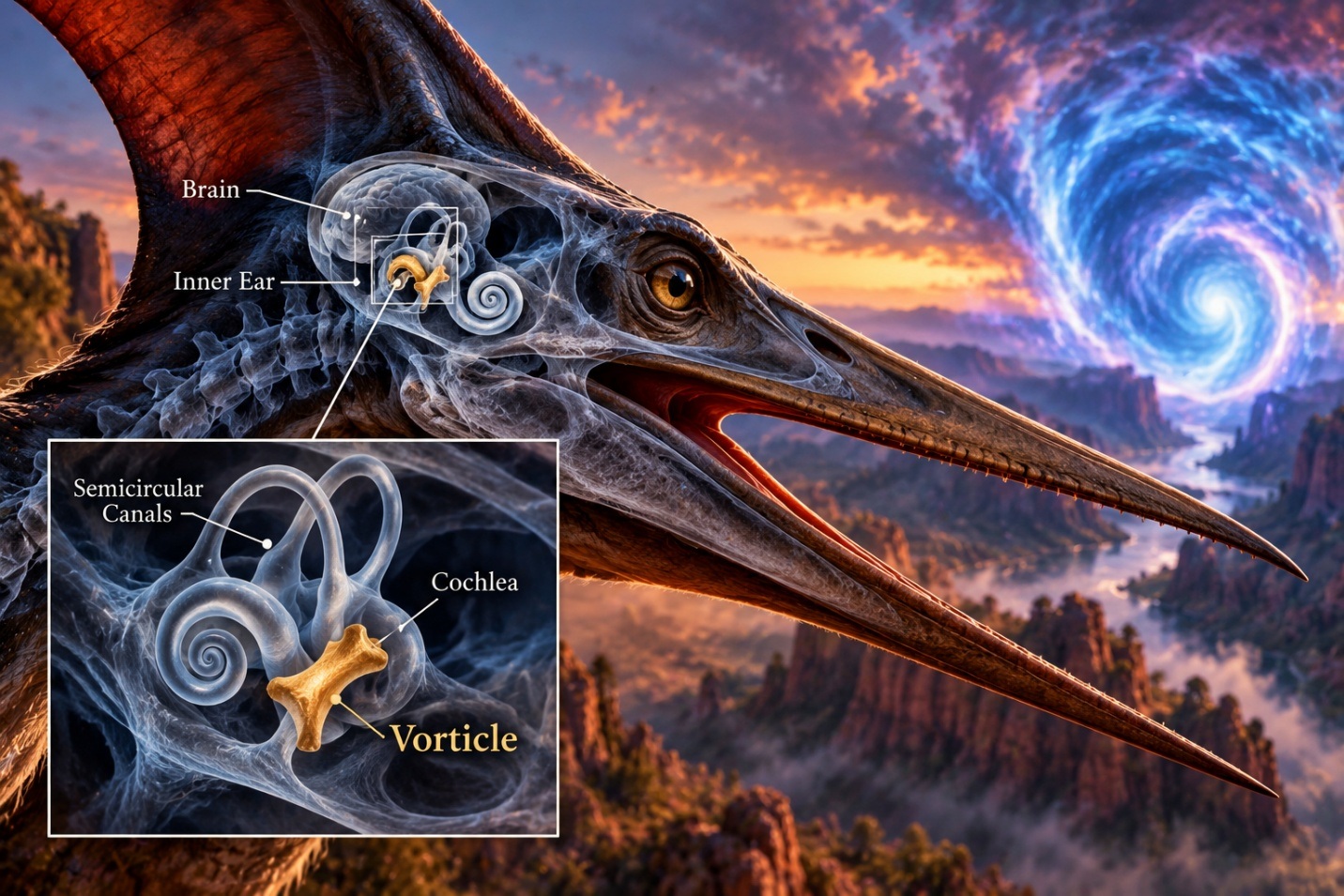
Over the ensuing millions of years, pterodactyls evolved a specialized bone in the inner ear known as the Vorticle, which vibrates when near a Vortex. The intensity of the vibration increases as the animal approaches one. The bone therefore functions as a biological navigation system, allowing a pterodactyl to locate the nearest Vortex even when it cannot see it.
Pterodactyls cannot create or control Vortexes. But the ability to find one—and fly through quickly—provides an obvious survival advantage.
Vortex travel produced another, particularly interesting adaptation. Each passage through the space between universes produces a small distortion between biological time and ordinary spacetime, causing the traveler's internal biological clock to run progressively slower. Repeated passages slow biological aging until, after a sufficient number of crossings, the clock essentially stops.
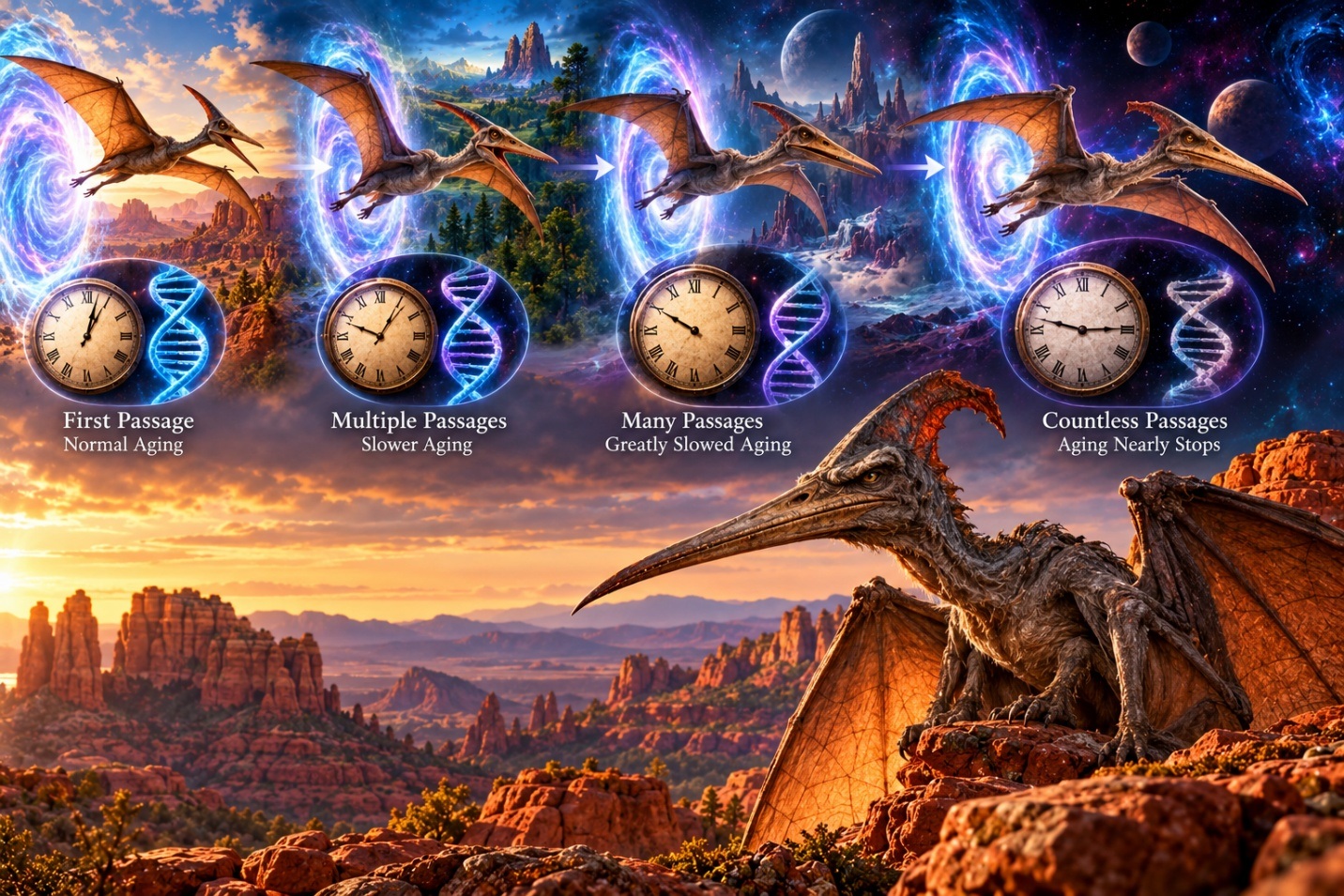
Consequently, some members of the Sedona Pterodactyl Clan may be millions of years old. Living that long may also explain their generally surly disposition.
The above explanation raises several interesting questions:
- With an infinite number of parallel universes available, why do some pterodactyls keep returning to Sedona?
- How did the pterodactyls’ collective grudge against cats arise?
- Why are cats so good at tracking pterodactyls?
- Why don't we see pterodactyls more often?
- Why do pterodactyls sometimes kidnap cats?
- If some pterodactyls are millions of years old, are they intelligent?
- Can humans learn to travel through Vortexes?
- Is a Vortex More Than a Passageway?
- Could the Vortex Be Conscious?
- Does the Vortex Have an Agenda?